
The final quarter of the year tends to change the way businesses think about sales. Annual targets are coming into sharper focus, management teams are reviewing performance, sales teams are assessing their pipelines, and business owners are thinking about what can still be achieved before the year comes to an end. For some businesses, this period is about closing a gap between current performance and the target they set at the beginning of the year. For others, it is about sustaining momentum and ending a strong year even stronger. But whether your business is struggling to meet its numbers, comfortably on track, or already performing above expectations, there is one question that deserves attention: are you capturing as much revenue as the market is currently making available to you?
That is a different question from simply asking whether sales are increasing or whether the business is on target. A business can be growing and still be leaving significant opportunities unexplored. It can have a successful product that is not reaching every customer who could buy it, loyal customers who could potentially buy more, profitable markets that have not yet been entered, or a strong position that competitors are gradually eroding without the business noticing. In the same way, a business can be meeting its annual sales target while missing opportunities that could have produced an even stronger result. The objective, therefore, should not only be to recover lost sales when things go wrong; it should also be to understand where additional sales can come from while there is still time to act.
This is particularly important in the current Kenyan business environment, where businesses are operating against a backdrop of both opportunity and pressure. Kenya’s economy recorded real GDP growth of 5.3% in the first quarter of 2026, while annual consumer price inflation reached 6.6% in August, with food and non-alcoholic beverages rising by 9.0% and transport by 15.7% over the year. These conditions do not provide a simple story of an economy that is either performing well or performing poorly. They point instead to an environment in which demand, costs, customer priorities and competitive conditions are changing at the same time, creating both challenges and opportunities for individual businesses. For a business owner, that makes understanding what is happening around the business just as important as understanding what has already happened in the sales report.
Sales tell you what happened; they do not always tell you what is possible
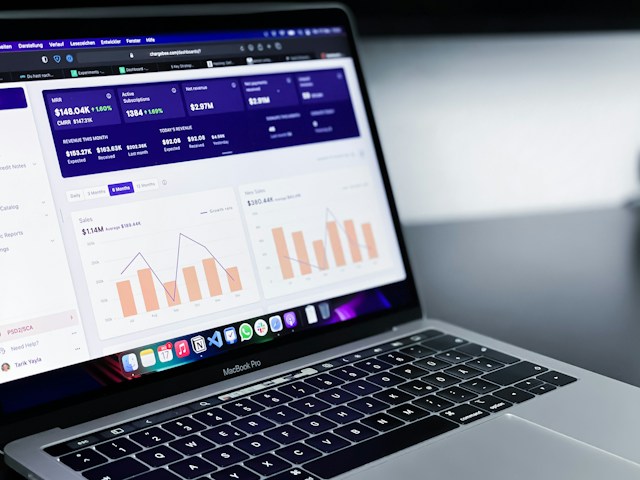
Most businesses have access to sales information, and that information remains one of the most important starting points for evaluating performance. You can see which products are selling, which customers are generating the most revenue, which branches are performing better, which territories are growing and which periods have produced the strongest results. The problem is that these figures primarily describe the outcome. They do not necessarily explain the circumstances that produced that outcome, and they certainly do not tell you everything about the opportunities that remain uncaptured.
Suppose, for example, that your sales have increased by 10% compared with last year. That is clearly positive, but what does it mean in context? If the overall category has grown by 15%, you may actually be losing ground despite increasing your revenue. If one customer segment is purchasing more while another has stopped growing, there may be a significant opportunity hidden behind the overall number. If your products are performing well in the areas where you already have strong distribution but remain difficult to find elsewhere, your sales could potentially be higher without acquiring a single new customer. Similarly, if competitors have introduced new products, changed their pricing, expanded their distribution or improved their visibility, their actions may be changing the opportunities available to you even when your own sales figures still look healthy.
This is why the pursuit of additional sales should not begin with the automatic assumption that the business needs more advertising, more promotions or more sales activity. Those actions may be appropriate, but they are decisions that should follow an understanding of where the opportunity actually lies. Before asking what the business should do more of, it is worth asking what customers are doing, what competitors are changing, what the market is becoming, and where the business may be underperforming relative to its potential.
There are six areas that can help businesses investigate that opportunity more systematically.

1. Customer Value Drivers: Are your existing customers buying as much as they could?
One of the easiest opportunities to overlook is the opportunity that already exists within your customer base. Businesses naturally focus on acquiring new customers, particularly when they are pursuing growth, but an existing customer who already understands your product and has chosen your business may have considerably more value than is currently being realised. The relevant question is therefore not only who your customers are, but what determines how often they buy, how much they buy, what else they might buy, and what prevents them from buying more.
This requires looking beyond your most loyal customers. Loyal customers can tell you what your business is doing well, but occasional customers, former customers, customers who considered buying but chose not to, and customers who moved to competitors can reveal something equally important: the barriers that prevent greater purchasing. A customer may have reduced the frequency of their purchases because their circumstances have changed, moved to a smaller pack size because of affordability, chosen a competitor because of availability, or stopped buying altogether because the product no longer meets an important need. None of these explanations can be assumed simply by looking at the sales number.
Understanding these differences can reveal opportunities for growth that do not necessarily require finding an entirely new audience. A business may discover that its most valuable customers are capable of buying additional products, that occasional customers can be converted into more frequent buyers, or that former customers are not lost permanently but have specific concerns that could be addressed. It may also find that different groups respond differently to price, product features, convenience or distribution, making a more focused approach possible. The purpose of customer research and segmentation in this context is therefore not simply to describe who buys from you, but to understand the circumstances that influence the amount and frequency of their purchasing. The larger lesson is straightforward: more revenue does not always require more customers; sometimes it requires a better understanding of the customers you already have.

2. Distribution and Reach: How much demand are you failing to convert because customers cannot reach you?
A product can be well known, competitively priced and strongly preferred, yet still fail to generate as many sales as it could if customers cannot easily find it. Distribution is therefore not simply an operational concern; it can be a direct determinant of revenue. If the product is not available in the locations, channels or outlets where customers shop, then part of the potential market remains inaccessible regardless of how much demand exists.
This becomes particularly interesting for businesses that already have strong sales because good overall performance can hide significant differences across locations and channels. One geographic area may be delivering excellent results while another has substantial but underserved demand. A modern retail channel may be growing while traditional trade remains underdeveloped. Some outlets may be well stocked while others experience frequent stock-outs, and competitors may be more visible or consistently available in places where your customers are already making purchase decisions.
A closer examination of distribution can therefore help answer questions that ordinary sales data may not reveal: how widely is the product actually available, where are the gaps in coverage, where are stock-outs occurring, which channels are growing, where are competitors more readily available, and which locations could offer additional sales if distribution were strengthened? These are central questions within market and trade research, where availability, distribution penetration, retail presence, channel performance, stock levels and competitive activity can be examined together.
The important point is that a business does not necessarily have to create more demand to generate more sales; sometimes it simply needs to make better use of the demand that already exists.

3. Competitive Dynamics: What are competitors doing that could affect your next sale?
Competition is often investigated only when a business begins losing customers, but waiting until sales are under pressure can make the exercise unnecessarily reactive. Businesses that are currently performing well have an opportunity to study competitors from a position of strength, looking not only for threats but also for ideas, gaps and areas where they can strengthen their own position before a competitor has gained enough ground to become difficult to dislodge.
The first mistake to avoid is assuming that competition is primarily about price. Price certainly matters, but customers can switch for many other reasons, including product features, packaging, convenience, availability, visibility, service, promotional offers and the overall value they believe they are receiving. A competitor may therefore be increasing its appeal without offering the lowest price, perhaps by introducing a more suitable pack size, improving retail availability, strengthening its product proposition or giving retailers stronger reasons to recommend the brand.
For this reason, competitor analysis should go beyond asking what others are charging. It should examine what they are changing, where they are becoming stronger, which customers they are targeting, how their products are positioned and how their presence is evolving across channels. Your original article highlights this broader view of competitive activity, including differences in packaging, retail visibility, distribution and channel incentives.
For a business that is already growing, this can be especially valuable because the purpose is not necessarily to imitate competitors; it is to identify where customers’ expectations are moving and where the business may have an opportunity to differentiate more effectively.

4. Product Experience and Perceived Value: Is your product performing to its full potential?
Strong sales can sometimes create false confidence about product performance because a product that sells well is naturally assumed to be a successful product. But sales volume alone does not tell you whether customers are completely satisfied, whether they would buy more, whether they prefer the product to available alternatives, or whether there are weaknesses that could eventually affect repeat purchase.
A product may attract trial because of advertising, promotion or brand familiarity and still struggle to generate repeat purchase if the actual experience does not match customer expectations. Depending on the category, this could relate to taste, aroma, texture, durability, usability, packaging, functionality or some other aspect of the customer experience. A business may therefore have an opportunity to increase sales not by spending more to attract customers, but by improving the product itself or strengthening the value proposition that customers experience after purchase.
This is where product research becomes particularly useful because it allows businesses to examine how people experience the product, what they value, how the product performs against alternatives and what could be improved. Controlled product testing, concept testing and other approaches can provide evidence about purchase intent, perceived value and specific product attributes rather than relying on internal assumptions. Your original article captures this distinction between generating initial trial and securing repeat purchase, as well as the importance of product experience and sensory or functional attributes.
The question for a growing business is therefore not simply “Is the product selling?”, but “What could make the product perform even better?”

5. Price and Value Perception: Are you maximising revenue, or simply maximising volume?
Price is perhaps the most obvious lever businesses consider when they want to drive sales, but it is also one of the easiest to misuse. Reducing a price can increase demand in some circumstances, but if price is not the actual barrier to purchase, the result can be lower margins without any meaningful improvement in volume. At the other extreme, a business may have strong demand and a product that customers value highly while pricing it more conservatively than necessary, effectively leaving potential revenue unrealised.
The real question is therefore not whether the business should increase or decrease its price, but how customers perceive the relationship between price and value and how that relationship affects their willingness to buy. This can vary significantly across customer groups, products, pack sizes and competitive situations. A price that is attractive to one customer segment may be less relevant to another, while a customer may be willing to pay more for a particular feature, quality level, convenience or product configuration.
Understanding price sensitivity and perceived value can help a business make more informed decisions about pricing rather than relying on assumptions or reacting to competitors. This matters whether sales are struggling or performing well. A business under pressure may discover that discounting is not solving the underlying problem, while a successful business may discover an opportunity to improve revenue without unnecessarily sacrificing demand. The goal is not to charge the lowest price or the highest price; it is to understand what price best supports the value you are trying to capture.
6. Market Opportunity: Are you operating in the best opportunities available to you?
The final area is broader than your current customers, products and competitors because it asks whether the market itself contains opportunities that the business has not yet captured. Businesses can become so focused on their established products, familiar customers and existing territories that they overlook shifts in demand, emerging segments, new channels or geographic opportunities that may have become attractive.
This is why market assessment matters even for businesses that are already performing well. If the category is expanding faster than your business, you may have room to capture additional share. If customers are moving towards a different product format or channel, the market may be changing around you. If demand is emerging in a new geography or customer segment, there may be an opportunity to expand beyond the assumptions that shaped your current strategy.
Market research can help businesses examine the size and characteristics of the market, understand demand patterns, identify attractive segments and locations, assess competitive structures and uncover gaps that existing offerings are not adequately addressing. Your original framework also makes the important distinction between a shrinking category and a business losing position within a growing category, because the strategic response to those two situations is very different.
The key question is therefore not simply “How much of the market do we currently serve?”, but “What opportunities exist around our business that we have not yet fully captured?”
Looking across the six areas
These six areas become most useful when they are considered together rather than treated as completely separate exercises. A business may discover, for example, that its customer base is healthy but that distribution is limiting growth, or that distribution is strong but competitors are offering a more compelling proposition. Another business may find that the product is well received but that pricing is preventing customers from buying as frequently, while another may discover that everything about its current operation is performing reasonably well but that the market itself has moved into a new opportunity that the business has not yet pursued.
This is why simply finding a single problem and trying to fix it can be insufficient. The objective is to understand how the different parts of the commercial environment interact and, from that understanding, determine where the most realistic opportunity lies.
Consider a business that has grown its sales by 8% over the past year. Without context, that sounds like success, and it may well be. But if the overall market grew by 15%, the business may actually be capturing less of the opportunity than it could. If one competitor has doubled its distribution in the same period, there may be another warning. If customer purchasing frequency has fallen while average transaction values have increased, the business may be experiencing a different underlying change altogether. The sales figure remains useful, but it becomes far more valuable when it is connected to evidence about customers, products, competitors, distribution, pricing and the market.
This is the difference between measuring performance and understanding opportunity.
Research should begin with a business question
The role of research in this process is not to produce more information for its own sake. It is to help a business answer a question that matters to a decision.
That distinction is important because businesses sometimes begin with a research method rather than a business problem. The conversation becomes, “Should we conduct a survey?” when the better starting point is, “What do we need to understand before we decide what to do?”
Perhaps the question is whether customers are willing to buy more. Perhaps the business wants to know whether a price change will affect demand. Perhaps it needs to determine why one competitor is gaining ground in a particular channel, whether a new product has genuine potential, or whether a new geographic market represents a worthwhile opportunity.
Once the business question is clear, the research can be designed around the evidence required to answer it. That evidence can then be analysed and interpreted so that management has a clearer basis for deciding what should change, what should be protected and where investment should be increased.
The progression is expressed as follows;
Question → Evidence → Understanding → Decision → Action, and it is a useful way of keeping research tied to the decisions the business actually needs to make.
Do not wait until sales are falling to investigate growth
One of the most important ideas behind this approach is that research should not be treated only as a response to a problem. Of course, research can help a business understand why sales have declined, why customers are leaving or why a product is underperforming, but it can be equally valuable when the business is doing well and wants to know what could be achieved next.
A business that is meeting its targets can still benefit from understanding its customers more deeply. A business that is growing can still examine whether distribution could be expanded. A business with a successful product can still test how it compares with competitors. A business with strong margins can still evaluate whether its pricing is capturing the value customers place on the product. And a business performing strongly in its current market can still investigate whether the next opportunity lies in a new segment, channel or geography.
The point is not to create change for its own sake. The point is to identify where additional value can be created and to make sure that opportunities are not being missed simply because the current numbers look satisfactory.
The final quarter is not only about closing the gap
As the final months of 2026 approach, businesses will naturally focus on targets and year-end performance, but a stronger approach is to use the remaining period to understand where additional sales can realistically be captured. Some businesses will need to address genuine weaknesses; others will find opportunities in customers they already have, channels they have not fully developed, products that could perform better, pricing that could be refined, competitors whose strategies reveal market gaps, or markets that are evolving faster than expected.
The final quarter, therefore, should not be viewed only as the point at which businesses discover whether they achieved what they planned at the beginning of the year. It is also an opportunity to ask whether there is more available than the current numbers suggest.
Because the difference between a business that is doing well and one that is doing exceptionally well is not always the amount of effort being applied. Sometimes it is the quality of the questions being asked, the evidence available to answer them, and the willingness to look beyond the obvious explanation.
Are you leaving revenue on the table?
There is still time to influence how 2026 ends, and that opportunity exists whether your sales are below target, comfortably on track or already exceeding expectations. The question is not simply whether your business is selling enough today; it is whether you understand where additional sales could come from and whether you are making full use of the opportunities available to you.
At ClerkMaster Consulting, we help businesses investigate the questions behind their commercial performance through market research, consumer research, competitor analysis, market and trade research, product testing, pricing studies and other structured research approaches. Our role is not to assume what the answer should be before the evidence is available, but to help businesses define the right questions, gather the relevant evidence, understand what it means and use that understanding to make better decisions.
Because good sales are worth protecting, but good sales should never stop you from asking what more is possible.
ClerkMaster Consulting
Data That Builds Businesses.